
How Buying in a 55+ Community Works in Las Cruces
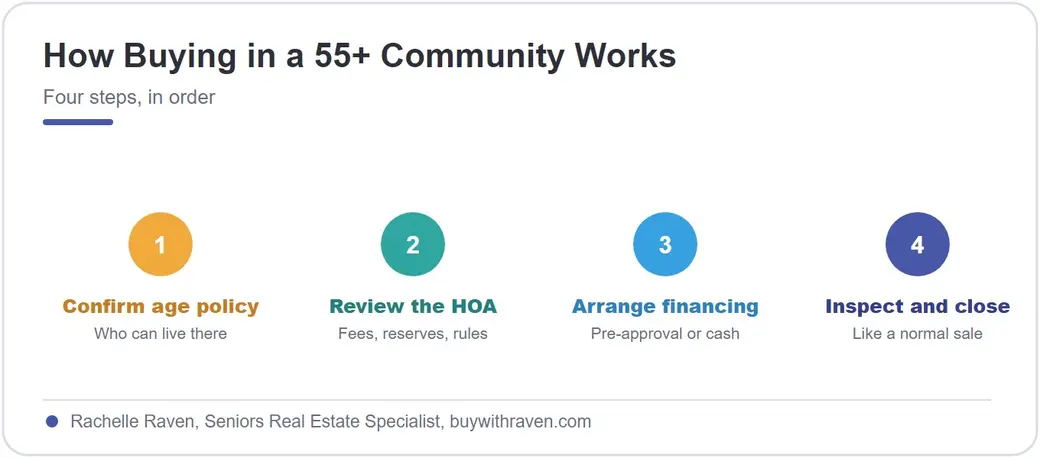
Buying in a 55 plus community is a little different from buying a regular home, and the differences are easy to miss until you are deep in a contract. The homes look like any others. It is the rules, the HOA, and the age requirements that set them apart. Here is how it actually works.
How does buying in a 55+ community work?
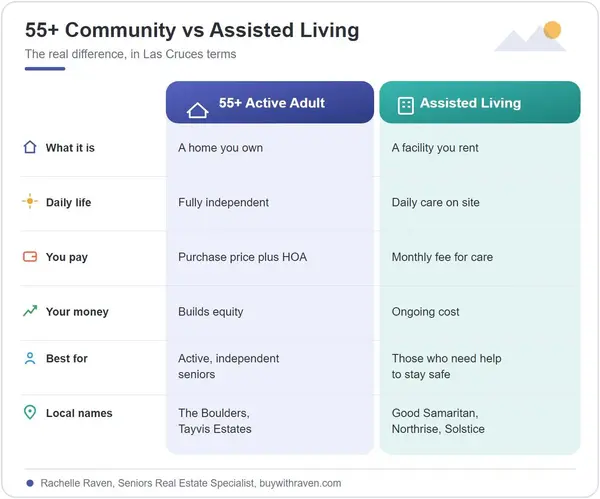
You buy and own the home like any other, but the community is age restricted and governed by an HOA with rules you agree to follow. That means confirming you meet the age requirement, understanding what the HOA covers and costs, and reading the community rules before you commit. Otherwise the purchase itself, the offer, financing, inspection, and closing, looks much like a standard home sale.
I am Rachelle Raven, a Seniors Real Estate Specialist here, and I walk buyers through these communities regularly. Let me cover the parts that trip people up.
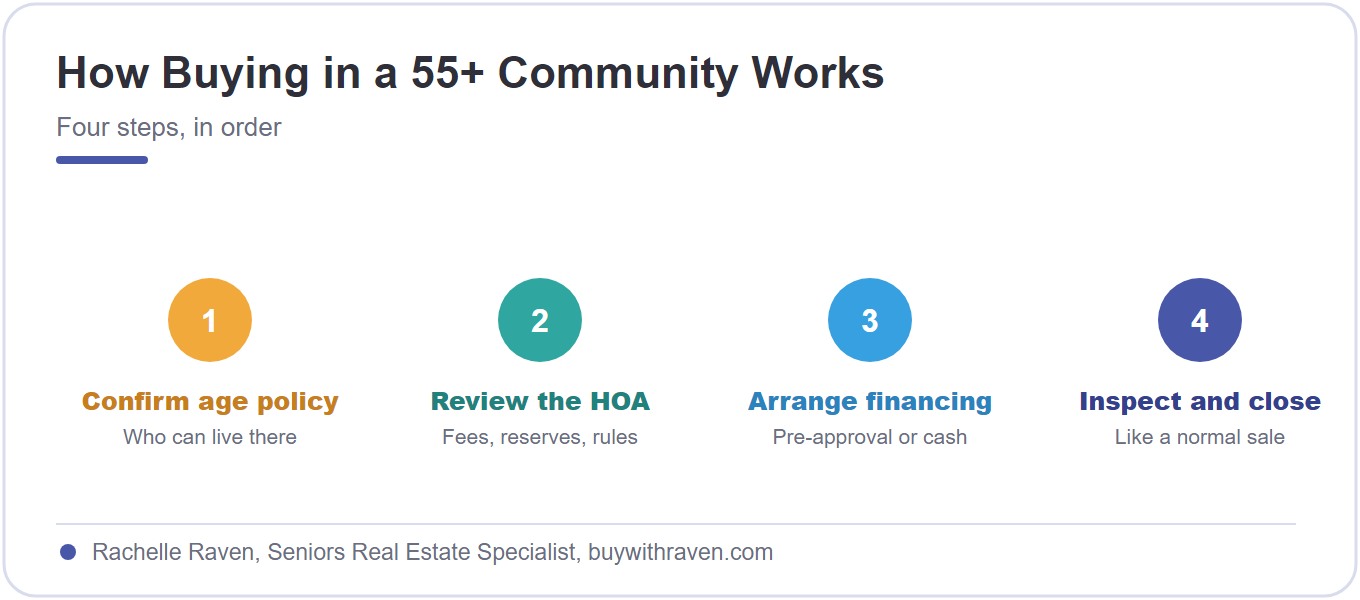
Buying in a 55+ community is a normal home purchase wrapped in age rules and HOA rules you need to understand first.
What are the age rules?
Federal housing law lets these communities restrict residents by age, and the common standard requires at least one resident to be 55 or older, with a policy that at least 80 percent of homes have someone 55 plus. Rules on younger spouses, adult children, and visitors vary from community to community. Some allow a younger spouse, some limit how long grandchildren can stay.
Never assume. Always read the specific community's age policy before you write an offer, because it controls who can actually live there with you.
At least one resident usually must be 55 or older, but each community sets its own details, so confirm the policy before you buy.
What does the HOA cover, and what should you check?
The HOA is central to these communities, so read its documents carefully. The monthly fee typically covers amenities like the clubhouse and pool, common area upkeep, and often front yard maintenance, which is a big part of the low maintenance appeal. In return you agree to the community rules, or CC&Rs, on things like exterior changes, rentals, and pets.
Before you commit, ask for the HOA budget, the reserve fund, any special assessments, and the full rules. A healthy reserve and clear rules are green flags. A thin reserve or a history of special assessments is a reason to look closer.
The HOA delivers the low maintenance lifestyle, so read its fees, reserves, and rules before you buy, not after.
How is financing different?
Mostly it is not, with a few wrinkles. You can typically use conventional financing to buy in a 55 plus community, and cash is common among downsizers using equity from a prior home. The wrinkles come from the HOA: lenders may review the community's financial health, and some condominium style communities have extra approval steps.
Get pre approved early and let your lender see the community details up front. As a Seniors Real Estate Specialist, I make sure the HOA documents get to your lender before they become a closing surprise.
Financing a 55+ home is usually standard, but the HOA's health can matter to your lender, so bring it in early.
Frequently asked questions
How do 55+ communities work when you buy?
You buy and own the home normally, but the community is age restricted and run by an HOA. You confirm you meet the age rule, agree to the community rules, and pay a monthly HOA fee for amenities and upkeep. The rest of the purchase resembles a standard sale.
Can a younger spouse live in a 55+ community?
Often yes, but it depends on the specific community's policy. The common standard requires at least one resident to be 55 or older, and rules on younger spouses and other occupants vary, so confirm before you make an offer.
What should I check before buying in a 55+ community?
Read the HOA budget, reserve fund, any special assessments, and the full community rules, and confirm the age policy. A healthy reserve and clear rules are good signs; a thin reserve or frequent special assessments warrant caution.
Can I get a mortgage for a 55+ community home?
Usually yes, with conventional financing, though many downsizers pay cash from prior equity. Lenders may review the community's financial health, so share the HOA documents with your lender early.
Categories
Recent Posts